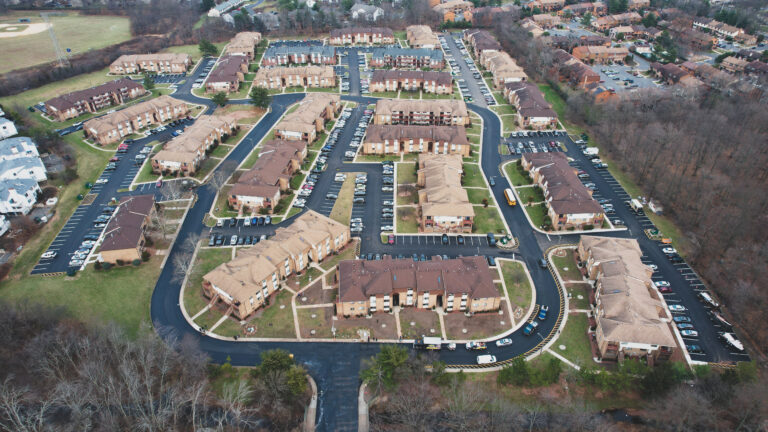
A compliant parking lot shapes every visitor’s first impression, which is why understanding ADA parking lot requirements matters for any commercial property. Clear markings, proper signage, and predictable travel routes support safety and reduce liability.
Since fading paint, shifting grades, and outdated layouts are common culprits of noncompliance, maintaining these elements is just as important as installing them.
This guide covers the essentials for keeping parking areas accessible, functional, and in compliance with ADA parking lot requirements.
Understanding the Americans with Disabilities Act
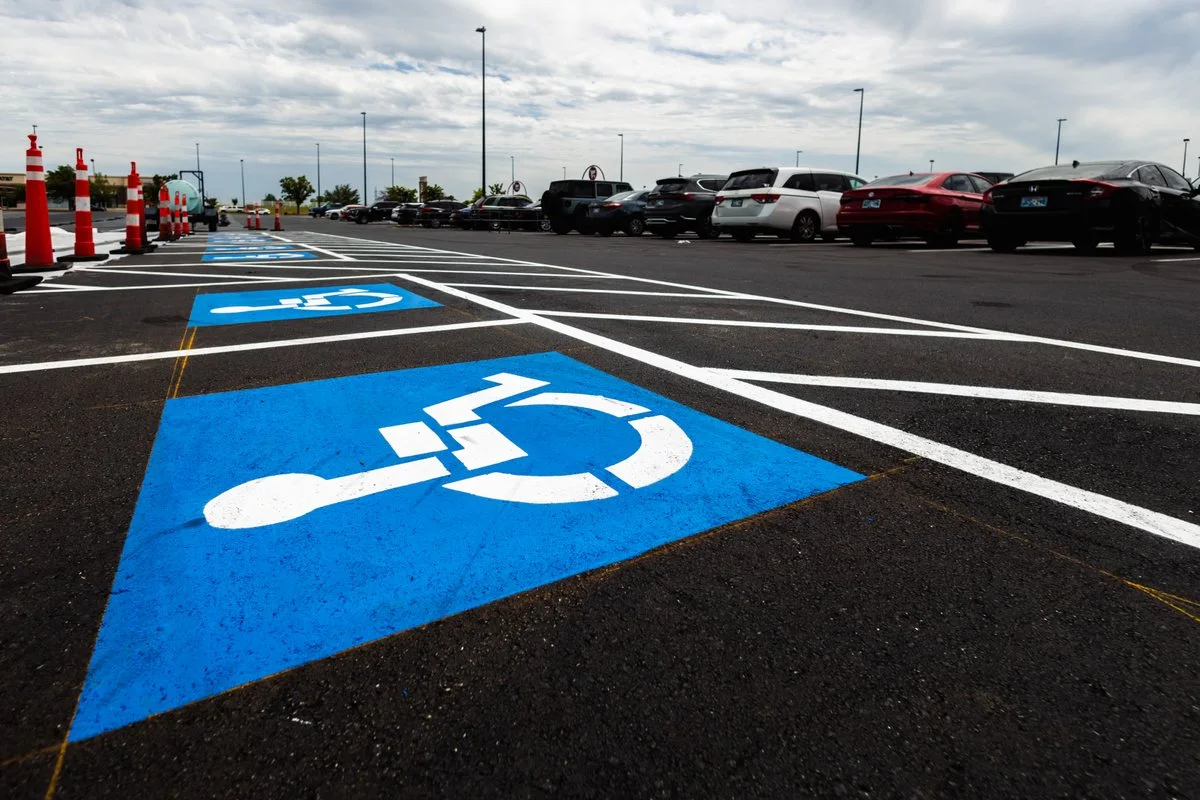
The Americans with Disabilities Act (ADA) requires public and commercial properties to provide accessible parking, routes, and entrances. For parking lots, the ADA Standards for Accessible Design outlines how spaces should be sized, marked, and signed to ensure visitors can move safely from their vehicles to the entrance.
Routine pavement inspections help ensure markings, grades, and ramps continue to meet those standards over time.
ADA Requirements for Parking Lots
Parking lot compliance is divided into several key areas that support overall ADA compliance. Together, these elements ensure someone using a mobility device can exit their vehicle, move across the lot, and reach the building entrance with ease.
Proper Signage
Signage is one of the simplest ways for visitors to identify accessible parking. Each stall must display the International Symbol of Accessibility, and van-accessible spaces must also display an additional “Van Accessible” sign. To keep signs visible over parked vehicles, the ADA requires the bottom edge to remain at least 60 inches above the ground.
Signs should be placed at the head of each stall and positioned where snow piles, landscaping, or tall vehicles won’t block them. If a sign fades or becomes damaged, replacing it quickly keeps the space easy to find and maintains compliance.
Parking Space Dimensions
The ADA outlines specific measurements for both standard accessible stalls and van-accessible stalls. These dimensions ensure visitors have enough clearance to exit their vehicle, deploy a lift if needed, and move comfortably into the access aisle. The measurements below reflect the common standards used across commercial facilities.
Car Accessible Space Dimensions
A standard accessible car space must be wide enough to accommodate mobility devices without obstructing traffic flow.
- Minimum stall width: 8 feet
- Access aisle width: 5 feet, marked with diagonal striping to discourage parking
- Placement: Spaces should be located on the shortest accessible route to the entrance when possible
These ADA handicap parking requirements allow drivers and passengers to maneuver safely, even when lots have much tighter spaces or are busier.
Van Accessible Space Dimensions
Van-accessible spaces provide additional width and clearance for visitors using wheelchair lifts or ramp-equipped vehicles. Requirements include:
- Minimum stall width: 11 feet, or 8 feet if paired with an 8-foot access aisle
- Access aisle width: 8 feet
- Vertical clearance: At least 98 inches along the vehicle route, parking space, and loading areas.
Van spaces should be distributed throughout the lot based on proximity to accessible entrances, especially in larger commercial complexes.
Number of Accessible Parking Spaces
ADA parking lot compliance requires a minimum number of accessible stalls based on the total number of parking spaces. Below is a simplified bullet version derived from the ADA guidance:
- 1 accessible space for lots with 1–25 total spaces
- 2 accessible spaces for 26–50 spaces
- 3 accessible spaces for 51–75 spaces
- 4 accessible spaces for 76–100 spaces
- For every additional 100 spaces, add 1 more accessible stall
- At least one accessible stall must be van-accessible
Large facilities may also need accessible spaces spread across multiple entrances, especially when serving different tenants or buildings.
Accessible Routes and Entry Points
After someone parks in an accessible stall, the path to the entrance should feel natural and easy to follow. ADA-compliant routes must be firm, stable, slip-resistant, and free of abrupt changes that interrupt movement. Each path also needs a curb ramp or flush transition so mobility devices can roll smoothly over elevation changes.
Directional striping helps keep these routes defined. Bright, well-maintained pavement markings guide pedestrians and help prevent them from entering vehicle lanes. When markings fade, navigation becomes less intuitive, which is why keeping these lines visible is so important.
Ramps and Proper Sloping
When the accessible route includes an elevation change, ADA-compliant ramps ensure visitors can safely reach the entrance. The ADA limits ramp slopes to a maximum of 1:12 and requires smooth, slip-resistant surfaces with level landings at both ends to support consistent, safe movement.
Because ramps sit along pavement edges, they tend to wear faster. Cracks, settlement, or rough transitions can interfere with accessibility and determine the type of repair needed:
- Infrared patching works well for minor surface issues
- Partial-depth patching addresses deeper deterioration
- Full reconstruction is used when the ramp area has failed
When Should I Restripe My Parking Lot?
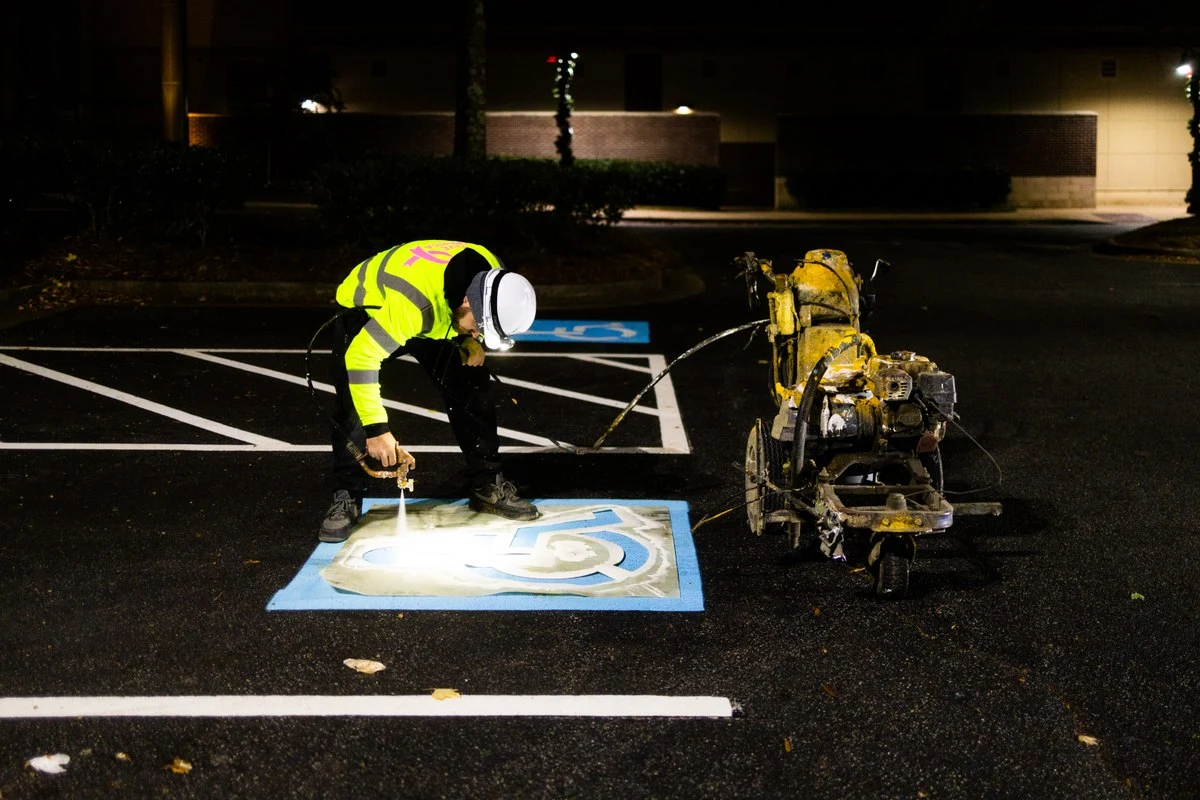
Clear striping keeps accessible stalls, aisles, and routes easy to recognize. Over time, sun exposure, traffic, snow equipment, and weather fade the paint, making the layout harder to follow. When lines become dull or uneven, drivers may unintentionally drift into access aisles or misjudge stall boundaries.
Most commercial properties restripe every one to two years, though busy sites may need it sooner. Many teams schedule restriping alongside other maintenance work to keep everything sharp and consistent.
Fresh markings help reinforce ADA dimensions, support safe navigation, and keep the layout clear for visitors. Consistent restriping is also one of the simplest ways to support parking lot ADA compliance throughout the year.
How Do I Make Sure My Parking Lot Is ADA-Compliant?
Staying ADA-compliant is an ongoing process. The goal is to ensure that every accessible element, from the stall itself to the route that leads inside, remains in good condition and continues to meet federal standards.
Wondering where to start? Here is a quick ADA maintenance checklist:
- Confirm accessible stall signs are mounted securely and remain easy to read
- Ensure pavement markings are bright, visible, and accurately outline each stall and access aisle
- Check that access aisles stay clear and offer enough room for mobility devices
- Review curb ramps for smooth transitions, stable surfaces, and consistent grades
- Monitor the pavement for cracks or settling that may alter slopes or create abrupt edges
- Refresh pavement markings when the lines start to fade
Routine inspections paired with timely repairs keep accessibility features reliable and help visitors navigate the property with confidence.
Choose Pave America as Your Parking Lot Contractor for ADA Compliance
Implementing ADA parking lot requirements goes beyond checking boxes. They must hold up in real-world conditions where pavement shifts, markings fade, and accessibility needs to work every day for every visitor. That’s why partnering with a contractor who understands both federal standards and the pavement conditions that support them is so important.
As a self-performing provider with a nationwide network of in-house crews, Pave America brings consistent workmanship, accurate layouts, and dependable scheduling to commercial properties of every size.
Our teams install and maintain the signage, striping, curb ramps, and accessibility features your lot relies on. We also provide pavement repair and maintenance services needed to keep everything functioning long after installation.
If you’re looking for a team that delivers clarity, expertise, and accountability from start to finish, Pave America is ready to help you create a safer, more accessible parking environment.
Your parking lot should welcome every visitor, and we’re here to pave the way.