Did you know that asphalt cracks are one of the earliest and most visible signs of pavement deterioration? On commercial properties, even small cracks in asphalt can quickly turn into larger structural problems if left unaddressed.
Water infiltration, freeze-thaw cycles, heavy traffic, and environmental exposure all contribute to crack formation, making asphalt crack repair a critical part of pavement care.
Understanding what crack filling is, how it works, and how it differs from other maintenance methods allows property owners and facility managers to make informed decisions for their pavement and their budget.
What Is Crack Filling?
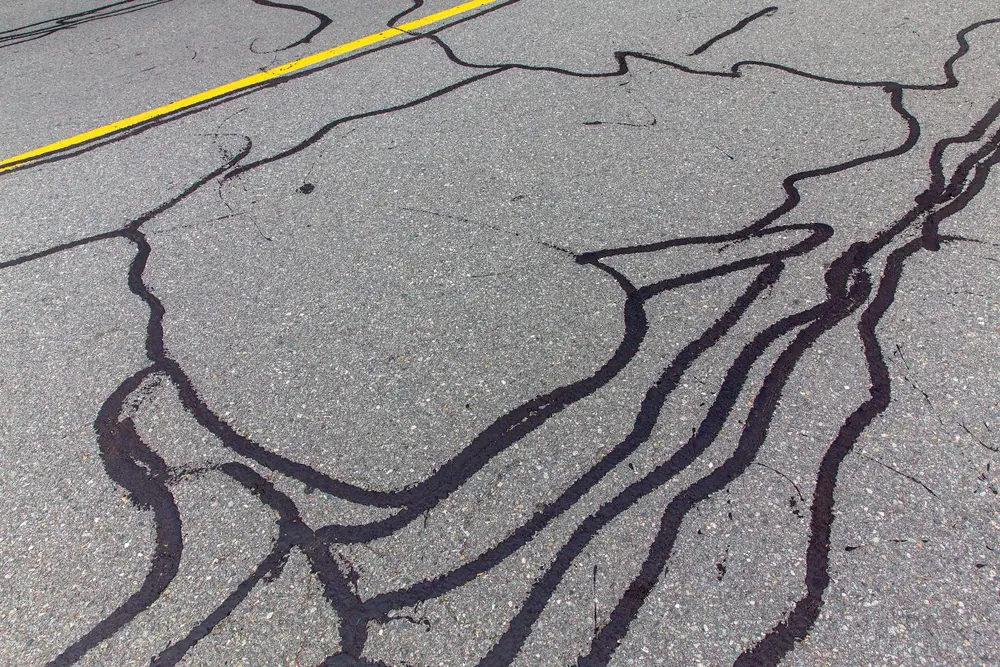
Crack filling is a pavement maintenance method for asphalt crack repair. These cracks are typically narrow and show limited movement throughout the year. The goal of crack filling asphalt is to block moisture and debris from entering the pavement and causing extensive damage.
When water seeps into untreated cracks, it weakens the base and subgrade layers beneath the asphalt. Over time, this can lead to potholes and larger structural damage. Crack filling addresses these issues early, before they escalate into more costly repairs.
Crack filling is commonly used on commercial asphalt surfaces such as parking lots, private roadways, loading areas, and access lanes. It is considered a preventative maintenance measure rather than a structural repair, making timing and proper application especially important.
Crack Filling vs. Crack Sealing
Crack filling and crack sealing are often used interchangeably, but they serve slightly different purposes in asphalt crack repair.
Crack Filling
Crack filling is typically used for cracks that experience minimal movement. These cracks are usually caused by aging asphalt, oxidation, or minor surface stress. The filling material is designed to stay in place and block moisture without needing to flex significantly as temperatures change.
Crack Sealing
Crack sealing is used for working cracks that expand and contract with temperature fluctuations. The sealant used in crack sealing is more elastic, allowing it to move with the pavement and maintain a watertight seal throughout seasonal changes.
What Causes Asphalt Pavement to Crack?
Asphalt is designed to be durable, but it is not immune to problems. Cracks form when asphalt is exposed to conditions that exceed the pavement’s capacity to withstand over time.
Knowing what causes asphalt cracks helps people identify issues early and choose the right maintenance strategy before damage spreads or becomes structural.
Moisture
Moisture is one of the leading causes of asphalt cracking. When water enters small surface cracks, it travels down into the base and subgrade layers beneath the pavement. These layers provide structural support, and once they are compromised, the asphalt above begins to weaken.
Poor Drainage
Poor drainage allows water to pool on asphalt surfaces rather than drain away. Standing water seeps into existing cracks, joints, and seams, increasing the likelihood of pavement deterioration. When water cannot properly drain, it accelerates crack formation and worsens existing damage.
Heavy Vehicle Loads
Commercial asphalt surfaces are frequently subjected to heavy loads. Repeated stress from these loads causes the pavement to flex beyond its design capacity, leading to surface cracks. Commercial crack filling helps slow the progression of cracking by preventing water from further compromising the pavement.
UV Exposure
Sunlight can age asphalt. Prolonged exposure to ultraviolet rays causes oxidation, which dries out the asphalt binder that holds the pavement together. As the binder becomes brittle, the pavement loses flexibility and becomes more prone to cracking.
Vegetation
Vegetation growth is another common contributor to asphalt cracking. Weeds and grasses often grow in small cracks along pavement edges or joints. As roots expand, they force cracks wider and allow more moisture to enter the pavement structure.
Oil and Chemical Spills
Oil, fuel, and chemical spills can weaken asphalt by breaking down the binder that holds the pavement together. Over time, these substances soften the asphalt, making it more susceptible to cracking under heavy traffic loads.

Hot-Pour vs. Cold-Pour Crack Sealer
Choosing the right crack sealer plays a major role in the long-term performance of asphalt crack repair. Hot-pour and cold-pour crack sealers are both used in commercial pavement maintenance, but they have their differences.
Hot-Pour
Hot-pour crack sealer is applied at high temperatures, allowing the material to flow deeply into cracks and bond tightly with the surrounding asphalt. Once cooled, it creates a strong seal that can expand and contract with pavement movement.
Cold-Pour
Cold-pour crack sealer is applied directly from the container without heating. It is easier and faster to install, making it useful for short-term or low-traffic applications. However, cold-pour materials typically have less flexibility and a shorter lifespan than hot-pour sealers.
Optimal Time and Frequency to Seal Asphalt
Timing is crucial for asphalt crack filling. Applying crack filler under the right conditions guarantees proper adhesion and leads to long-lasting results, while poor timing can diminish effectiveness.
Moderate temperatures are ideal for filling asphalt cracks. When temperatures are neither too hot nor too cold, cracks tend to be at their neutral width, allowing sealant materials to work as intended. It’s important to do this during dry conditions, as moisture can hinder proper bonding and result in premature failure.
Traffic levels should also be considered when scheduling crack filling. High-traffic commercial properties may require more frequent inspections and maintenance due to increased stress on the pavement surface. In many cases, crack filling is performed annually as part of a broader preventative maintenance plan, though frequency can vary based on climate, traffic volume, and pavement age.
Why Crack Filling Benefits Your Property
While cracks may appear minor at first, failing to address them can lead to more severe issues. When performed correctly and consistently, crack filling delivers several key benefits for commercial properties.
Prevention of Water Damage
One of the most important benefits of crack filling asphalt is preventing water from entering the pavement structure. Even narrow cracks allow moisture to penetrate beneath the surface, weakening the base layers that support the asphalt.
Once water reaches the base or subgrade, it can lead to soft spots, surface deformation, and eventual pavement failure. In colder regions, freeze-thaw cycles worsen this damage as trapped moisture expands and contracts. Crack filling blocks these entry points, helping preserve the structural integrity of commercial asphalt surfaces.
Extends Your Asphalt’s Lifespan
Routine crack filling helps slow the natural aging process of asphalt. As pavement ages, oxidation and traffic stress reduce flexibility, making cracks more likely to form and spread.
Addressing cracks promptly enables property owners to postpone larger repairs or resurfacing projects. This proactive strategy helps commercial asphalt remain functional for longer periods, maximizing ROI from the initial pavement installation.
Reduces Maintenance Costs
Crack filling is one of the most cost-effective asphalt maintenance strategies available. Addressing cracks while they are still small prevents them from developing into potholes or structural failures that require more extensive repairs.
For facility managers and property owners, consistent parking lot crack filling reduces emergency repair needs and supports predictable maintenance budgeting. Preventive maintenance almost always costs less than reactive repairs.
Enhances Safety
Cracks in asphalt surfaces create safety risks for both vehicles and pedestrians. Uneven pavement increases the likelihood of trips, falls, tire damage, and vehicle wear. On commercial properties, these issues can contribute to liability concerns and operational disruptions.
Crack filling helps maintain smoother driving and walking surfaces, supporting safer conditions for employees, customers, and visitors. Well-maintained asphalt also improves visibility of pavement markings and traffic flow, especially in busy parking areas.
Choose Pave America as Your Asphalt Crack Filling Contractor
When it comes to commercial crack filling, experience matters. Pave America provides professional asphalt crack filling services for commercial properties nationwide, using proven methods and materials designed for long-term performance.
As a self-performing provider, Pave America does not subcontract work. Projects are handled by experienced in-house teams who understand how climate, traffic, and pavement conditions affect asphalt. This approach ensures quality control and consistent results across every project.
Whether your property requires routine parking lot crack filling or a broader pavement maintenance strategy, Pave America delivers. Contact us to schedule a pavement evaluation and discuss your needs.