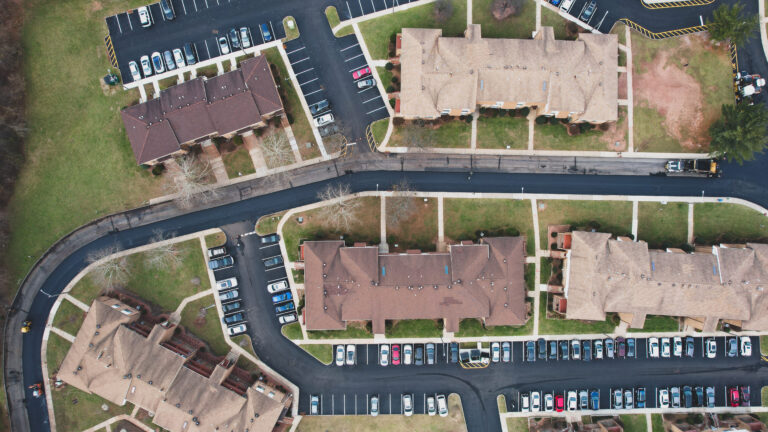
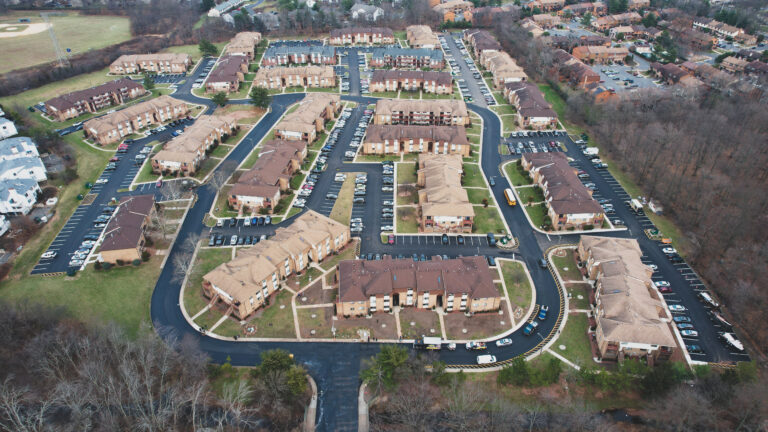
Effective pavement drainage is essential for maintaining safe roads, parking lots, and other paved surfaces. Two of the most common types of road drainage systems are storm drains and catch basins. Together, they help reduce the risk of flooding and surface damage.
While the terms ‘storm drains’ and ‘catch basins’ are often used interchangeably, they play distinct roles in managing water runoff.
In this guide, we’ll explain the key components of a catch basin vs storm drain and common drainage issues so you can make informed decisions about pavement maintenance.
Storm Drains
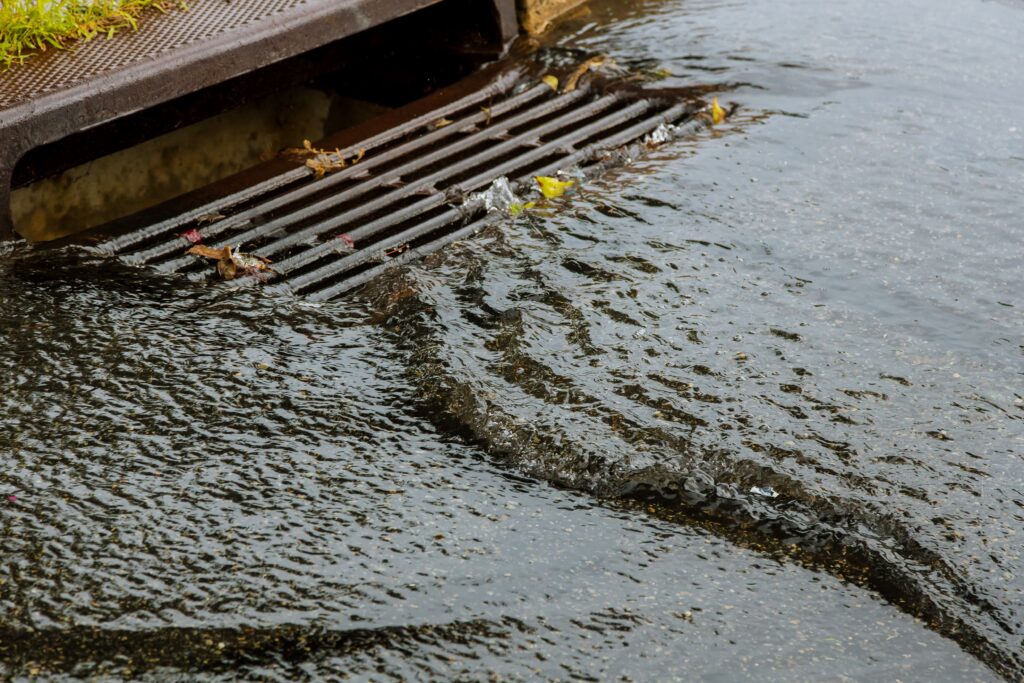
Storm drains collect and direct rainwater from streets, parking lots, and commercial properties. Typically covered by a metal grate or slotted opening, they sit flush with the pavement and connect directly to an underground piping system.
When heavy rain falls, storm drains capture water runoff and transport it through underground pipes, preventing water from collecting on the surface. This helps reduce safety risks like slippery conditions and hydroplaning, and also protects pavement from erosion, cracking, and structural deterioration.
Key Components of Storm Drains
The main components of a storm drain system include
- Grates: Positioned at the surface, grates allow rainwater to enter the system while helping block large debris from falling inside.
- Drain Pipes: These underground pipes transport collected water away from the paved area and into underground drainage or sewer systems.
- Inlet Structures: The opening and connection point that directs surface water into the underground piping system.
Routine maintenance is essential to keep storm drains functioning properly. Clearing debris from grates and pipes helps prevent backups, flooding, and costly pavement repairs.
Catch Basins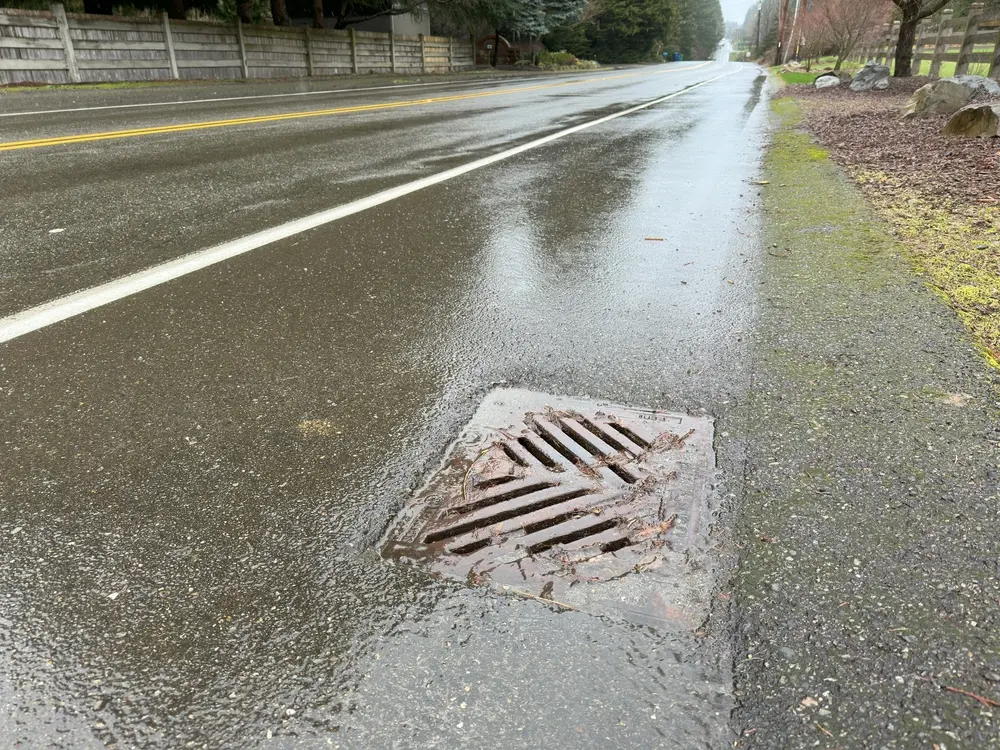
What is a catch basin drain?
Catch basins are a special type of storm drain that intercept and trap debris before it enters the main drainage pipes.
They are commonly installed in parking lots, roadways, and other high-traffic paved areas where runoff carries sediment, leaves, trash, and other materials. By capturing this debris, catch basins help prevent clogs, improve drainage efficiency, and protect the overall system from damage.
Key Components of Catch Basins
Catch basins consist of several key parts that work together to filter debris and ensure smooth water flow:
- Grate: The top of the catch basin is fitted with a grate that allows water to enter while blocking large debris from falling in.
- Sump: This is the lower part of the basin, where debris settles. Over time, the sump can fill up with accumulated material, which is why regular maintenance is important.
- Outlet Pipe: The water, now filtered of debris, flows out of the catch basin through the outlet pipe and into the larger storm drainage system.
The Role of Proper Drainage For Your Pavement
Proper drainage is key to preserving the strength and longevity of your pavement. Over time, water exposure can weaken asphalt, causing cracks, surface damage, and costly repairs. Installing and maintaining these types of road drainage systems keeps your paved surfaces in top condition.
1. Enhances the Longevity of the Pavement
Proper drainage is one of the most effective ways to extend the life of your pavement. By directing water away from the surface, storm drains and catch basins prevent water from seeping into cracks, which can cause further damage over time. With regular maintenance, you can protect your pavement from costly repairs and delays.
2. Prevents Water Damage
Water is one of the largest threats to paved surfaces. When water accumulates on the surface or seeps into cracks, it can weaken the pavement structure and lead to potholes, cracking, and even complete pavement failure. Storm drains and catch basins prevent this by quickly removing excess water and reducing the likelihood of damage.
3. Reduces Risk of Potholes & Cracks
When water seeps into cracks and freeze-thaw cycles occur, it can cause the cracks to widen and deepen, eventually forming potholes. Proper drainage helps minimize these risks by preventing water from pooling in vulnerable areas and preserving the integrity of your pavement.
Common Drainage Issues
Even well-designed storm drains and catch basins can develop problems over time. If not addressed promptly, drainage issues can lead to standing water, pavement deterioration, and costly repairs.
Look for these warning signs that your drainage systems need attention:
1. Standing Water
Standing water forms when runoff collects in low areas instead of flowing into nearby drains. Over time, pooled water can seep into small cracks, weakening the pavement surface and the base layers beneath it. In colder climates, freeze-thaw cycles can lead to expansion, cracking, and surface failure. Routine inspections and proper drainage design help minimize this risk.
2. Clogged Drains
Clogged drains are one of the most common drainage problems. Leaves, sediment, trash, and other debris can build up inside storm drains and catch basins, restricting water flow. When drains clog, water may back up and overflow onto the pavement, increasing the risk of flooding and structural damage. Regular cleaning and debris removal are essential to keeping the system clear and fully functional.
3. Improper Slopes & Grading
Drainage systems rely on proper grading to guide water toward drains. If pavement slopes are incorrect or have settled over time, water may pool in low spots instead of draining away. Poor grading can accelerate erosion, cracking, and surface breakdown. Professional installation and repairs help ensure water flows where it should.
4. Poor Maintenance
Like any infrastructure, drainage systems require ongoing care. Neglecting routine inspections and cleanouts allows minor issues to grow into major problems. Proactive maintenance keeps drains clear, prevents standing water, and helps you get the most out of your investment.
Choose Pave America as Your Pavement Drainage Contractor
For reliable, experienced pavement drainage services, trust Pave America. Our skilled in-house teams specialize in installing and maintaining all types of road drainage systems. We’ll help you understand the components of a catch basin vs storm drain so you can make informed decisions for your property.
Whether you need a new system installed or an existing one repaired, our team has the expertise and resources to ensure the job is done right.
Contact us today to protect your pavement investment with effective drainage solutions.