
When choosing between asphalt and concrete paving, commercial property owners and facility managers often need to weigh factors like budget, traffic demands, climate, and long-term maintenance.
Asphalt is known for its adaptability and ease of repair, while concrete stands out for its strength and longevity. Both materials play an important role in commercial paving, and the best option often depends on how and where the pavement will be used.
At Pave America, we want to help you make the right choice for your property. This guide will go over the basics of asphalt vs concrete pavement so you can make an informed decision that best fits your needs.
Asphalt
Asphalt is one of the most widely used paving materials for commercial properties across the country. It is commonly installed in parking lots, drive lanes, private roads, and other high-traffic commercial areas.
Asphalt is made from a mixture of aggregates and asphalt binder, which gives the finished product flexibility and allows it to handle repeated traffic loads without cracking as easily as more rigid materials. Commercial asphalt surfaces can often be installed and opened to traffic faster than concrete, minimizing downtime for businesses and facilities.
This material is also well-suited for areas that experience regular freeze-thaw cycles. Its flexibility allows it to expand and contract with temperature changes, reducing the risk of large structural cracks when compared to more rigid paving materials.
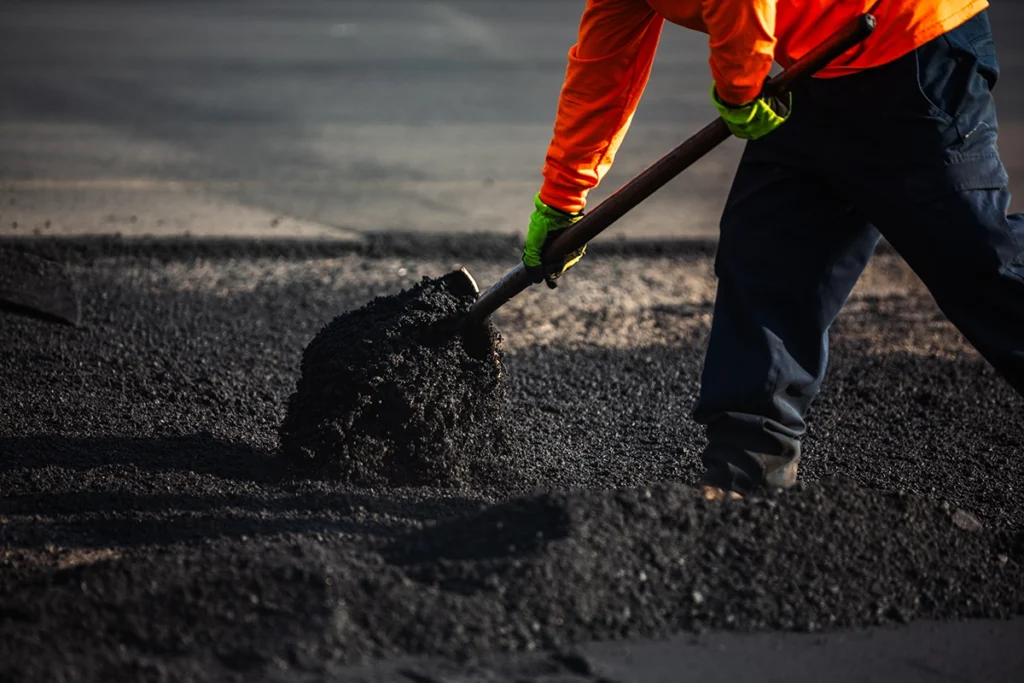
Benefits of Asphalt
While it may not be the right fit for every application, the benefits of asphalt are hard to ignore when flexibility, speed, and maintenance are priorities. Asphalt is:
Affordable
Asphalt is generally more affordable upfront than concrete paving. Lower initial installation costs make it a solid option for large commercial parking lots and expansive paved areas. This allows property owners to allocate budget toward other site needs while still receiving a durable pavement.
Over time, the ability to maintain and repair asphalt without full replacement also saves you money. Rather than investing in a large-scale reconstruction, many asphalt issues can be addressed through targeted maintenance strategies.
Easy to Maintain & Repair
Routine maintenance plays a key role in preserving asphalt surfaces and preventing small issues from becoming costly problems. Asphalt is often easier to maintain and repair compared to other paving materials like concrete.
If the surface cracks or breaks down, repairs can often be completed without removing large sections of pavement.
Versatile
Asphalt is a highly versatile paving material that works well across many commercial properties. It can support everything from light vehicle traffic in office parking areas to heavier loads in truck courts and service roads.
This adaptability makes asphalt a practical choice for properties with mixed-use traffic patterns or evolving operational needs.
Can Be Recycled
Another key benefit of asphalt paving is its recyclability. Asphalt is one of the most recycled materials in the United States, and reclaimed asphalt pavement can often be reused in future projects. This reduces material waste and supports more sustainable paving practices.
Recycling asphalt also helps control project costs by reducing the need for new raw materials. For commercial property owners focused on long-term planning and environmental responsibility, this is a bonus.
Concrete
Concrete paving is known for its strength and long lifespan, making it a common choice for commercial areas that experience heavy loads or require added structural stability. Concrete is frequently installed in loading docks, industrial yards, ramps, walkways, and other locations where durability is critical.
Unlike asphalt, concrete is a rigid pavement. This rigidity allows it to handle heavy, stationary loads without deforming, which is why it is often selected for areas with frequent truck traffic or equipment use. While concrete typically has a higher upfront cost, its long lifespan can make it a cost-effective solution in the right application.
Concrete paving also requires less frequent surface maintenance than asphalt. However, when repairs are needed, they can be more involved and time-consuming. Because of this, concrete is often chosen for areas where long-term performance outweighs the need for quick repairs or modifications.
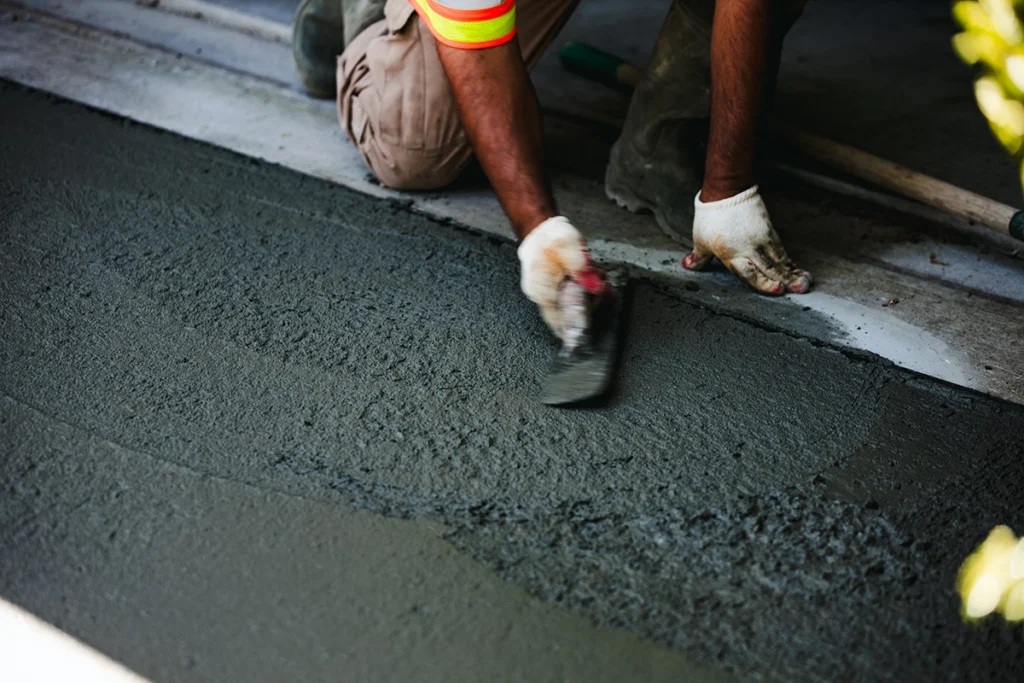
Benefits of Concrete
Concrete provides several advantages that make it well-suited for specific commercial paving needs. While it may not offer the same flexibility as asphalt, it’s still a strong option for commercial properties with heavy vehicle traffic.
Longevity
Concrete pavements can last for decades with minimal surface deterioration. This makes it a strong option for commercial areas where long-term durability is a priority and traffic patterns are predictable.
Because concrete doesn’t soften in high temperatures, it maintains its shape under heavy loads, reducing the risk of rutting or surface deformation over time.
Cooler in the Summer
Concrete reflects more sunlight than asphalt, allowing it to stay cooler during hot weather. This can help reduce surface temperatures in large commercial areas and may contribute to improved comfort for pedestrians and vehicles.
Easy Winter Maintenance
Snow removal equipment is less likely to damage concrete surfaces, and the material does not soften under temperature changes. This makes concrete a reliable option for areas that require frequent snow clearing, such as loading zones and pedestrian pathways.
Concrete also supports faster snow and ice melt due to its thermal properties, which can improve winter safety when combined with proper maintenance practices.
Fire Resistant
One of the big differences between concrete and asphalt is that concrete is a non-combustible material, making it naturally fire-resistant. This can be an important factor in industrial or high-risk environments where fire safety is a concern.
Concrete also doesn’t release harmful fumes when exposed to high temperatures, while maintaining its structural integrity better than many alternative paving materials.
How Weather & Climate Can Affect Each Material
Weather and climate play a major role in how paving materials perform over time. When comparing asphalt paving vs concrete, it is important to consider how each material responds to temperature changes, moisture, and seasonal conditions.
Asphalt is flexible, which allows it to expand and contract with changing temperatures. This flexibility helps reduce cracking in areas with frequent freeze-thaw cycles, but prolonged heat can cause asphalt to soften if not properly maintained. Regular inspections and timely maintenance help asphalt surfaces perform well across varying climates.
Concrete, on the other hand, is more resistant to heat and does not soften in high temperatures. Its lighter color reflects sunlight, helping it stay cooler during hot weather. In colder climates, concrete holds up well under snow removal techniques like shoveling and salting, though expansion joints are necessary to manage temperature-related movements.
Choose Pave America as Your Asphalt & Concrete Paving Contractor
Deciding between asphalt vs concrete pavement comes down to your property’s specific needs and your budget. At Pave America, we provide commercial asphalt and concrete paving services nationwide, supporting projects of all sizes with experienced, self-performing teams.
By evaluating traffic patterns, climate conditions, and long-term maintenance goals, our team helps commercial property owners select paving solutions that make sense for their facilities. With clear communication and proven expertise, our team delivers durable results that support safety, functionality, and long-term value.
If you are planning a new paving project or evaluating existing pavement, contact us today to get expert guidance and a solution tailored to your commercial property.